



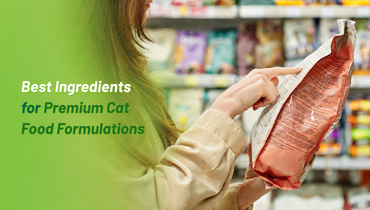
The best ingredients for premium cat food formulations are single-origin named meats, low-ash poultry meals, concentrated marine lipids, and targeted functional fibers. Premium feline recipes require high concentrations of bioavailable animal proteins to satisfy obligate carnivore amino acid demands, alongside clean fat sources that deliver arachidonic acid and docosahexaenoic acid directly. Formulations succeed commercially when these core animal inputs combine with non-digestible prebiotic fibers and stable micronutrient premixes that survive extrusion or canning.
Feline digestive physiology dictates that recipe success depends on ingredient bio-delivery rather than gross nutrient percentages. Because domestic cats possess distinct metabolic pathways that cannot synthesize vital amino acids, fatty acids, and vitamins from botanical precursors, ingredient selection must focus on nutrient forms that are immediately usable at the cellular level.
What are the best ingredients for premium cat food formulations?
The best ingredients for premium cat food formulations consist of deboned poultry, low-ash single-species meat meals, cold-water marine oils, and specialized functional oligosaccharides. Formulators select these materials to deliver dense amino acid profiles, complete essential fatty acid arrays, and gentle digestive support while avoiding non-nutritive botanical fillers. Premium recipes balance structural durability with metabolic utility.
Feline dietary architecture demands high animal protein density, minimal carbohydrate content, and deliberate lipid preservation. Generic recipes frequently depend on bulk plant proteins to meet regulatory nitrogen minimums, but premium lines isolate their protein fraction within named animal tissues to ensure complete amino acid digestibility. Selecting the correct ingredient class determines not only finished nutritional value but also processing stability and feline acceptance.
| Ingredient Category | Primary Premium Options | Formulation Function | Critical Specification Target |
|---|---|---|---|
| Primary Muscle Protein | Deboned chicken, deboned turkey, fresh salmon | Primary amino acid delivery, high palatability | Moisture under 70%, peroxide value under 5 mEq/kg |
| Concentrated Protein Meal | Low-ash chicken meal, low-ash lamb meal | Base amino acid density, structural kibble matrix | Ash under 11%, protein minimum 65% |
| Essential Lipids | Salmon oil, menhaden oil, filtered chicken fat | Delivery of DHA, EPA, and arachidonic acid | Free fatty acids under 2%, low oxidation index |
| Functional Carbohydrates | Whole green peas, red lentils, chickpea flour | Extrusion expansion, starch gelatinization | Insoluble starch control, uniform particle mesh |
| Prebiotic Digestive Fibers | Short-chain fructooligosaccharides, chicory root | Microflora fermentation, hairball management | Minimum 90% purity, low moisture content |
| Micronutrient Supplements | Chelated proteinates, stabilized taurine | Cellular uptake, thermal survival | High chelation ratio, retort heat tolerance |
Which animal protein sources provide optimal feline amino acid profiles?
Fresh deboned poultry and low-ash single-species poultry meals provide the optimal amino acid profiles for feline formulations because they supply concentrated taurine, arginine, and methionine. Cats maintain continuous hepatic enzyme activity that catabolizes amino acids at higher baseline rates than other companion animals, making high-digestibility animal tissue essential.
Formulators prioritize poultry muscle tissue and low-ash meals over generic animal by-products to protect renal function. High ash levels correlate with excessive bone mineral fragments, driving dietary calcium and phosphorus levels above recommended feline urinary targets. Selecting meals manufactured with advanced mechanical deboning steps reduces total inorganic mineral fractions while preserving crucial sulfur amino acids.
Hydrolyzed animal proteins also serve a distinct functional purpose in premium recipes. Controlled enzymatic hydrolysis cleaves long-chain protein molecules into small peptide fractions, decreasing ingredient allergenicity while enhancing feline olfactory acceptance. These hydrolyzed inputs integrate cleanly into both dry extrusion pre-conditioners and wet pâté emulsions, elevating total digestible protein content without adding excess dry matter bulk.
How should formulators evaluate marine and animal fats for feline diets?
Formulators evaluate fats for feline diets by measuring baseline peroxide values, free fatty acid percentages, and native concentrations of arachidonic acid and docosahexaenoic acid. Premium cat foods rely on marine lipid sources like wild salmon oil and menhaden fish oil, alongside refined poultry lipids, to deliver ready-to-use polyunsaturated fats.
Animal fat quality directly dictates feline feeding enthusiasm and finished product shelf stability. Cats show strong behavioral preference for diets coated with clean, unoxidized poultry fat that retains natural volatile aroma compounds. During manufacturing, lipid batches with elevated secondary oxidation markers depress consumption and degrade fat-soluble vitamin reserves inside the final packaging.
Marine oils provide crucial long-chain omega-3 fatty acids that support cellular membranes, skin barrier function, and cognitive health. Feline metabolic pathways lack sufficient desaturase and elongase enzyme activity to process plant-based short-chain fatty acids into physiologically active long-chain forms. Formulations must introduce finished eicosapentaenoic acid and docosahexaenoic acid directly through cold-filtered marine oils, stabilized immediately at sourcing with mixed natural tocopherols.
Which functional fibers and prebiotic ingredients support feline digestion?
Functional fibers such as short-chain fructooligosaccharides, dried chicory pulp, and refined plant cellulose support feline digestion by feeding beneficial intestinal microbes and moving ingested fur through the digestive canal. While cats require minimal dietary carbohydrates for energy, functional non-starch polysaccharides maintain gastrointestinal motility and fecal quality.
Balancing soluble and insoluble fiber fractions prevents loose stools while eliminating hairball formation. Soluble prebiotic fibers pass unabsorbed into the colon, where commensal bacteria ferment them into volatile short-chain fatty acids like acetate, propionate, and butyrate. These metabolic byproducts acidify the intestinal lumen, nourish colonocytes, and discourage the proliferation of opportunistic intestinal pathogens.
Insoluble fiber sources contribute mechanical structure to the digesta without fermenting. Refined powdered cellulose and miscanthus grass fibers provide physical friction along the mucosal lining, collecting loose hairs swallowed during grooming routines and escorting them into the stool. Premium formulations balance these insoluble fibers alongside fermentable oligosaccharides to keep total crude fiber within a safe range that avoids diluting nutrient density.
How do extrusion and canning requirements dictate binder selection?
Extrusion and canning manufacturing requirements dictate binder selection by establishing distinct physical thresholds for starch gelatinization, hydrocolloid gel formation, and moisture retention. Dry kibble production requires functional starches that expand under thermal pressure, whereas wet canned foods utilize complex hydrocolloid gum matrices to suspend meat pieces in thick gravies.
Dry kibble manufacturing depends on precise starch gelatinization to prevent product crumble during transit and retail handling. Formulators building grain-free premium products utilize pulse starches from peas, lentils, or tapioca to achieve structural expansion at lower inclusion rates than traditional cereal grains. These low-glycemic pulse flours supply the starch amylose content required to bind dehydrated meat particles together during the high-shear extrusion phase.
Wet canned formulations avoid dry starches entirely, relying on functional meat proteins and specialized hydrocolloid systems. Marine and plant-derived gums, such as guar gum, locust bean gum, and agar-agar, bind unbound water molecules and stabilize fat-in-water emulsions throughout retort thermal sterilization. This prevents fat separation at the top of the can and maintains consistent product texture from the canning line to the food bowl.
What micronutrient forms ensure stability in commercial processing?
Organic chelated mineral proteinates and encapsulated vitamins ensure nutritional stability in commercial processing by resisting thermal degradation and preventing nutrient-binding reactions. Feline recipes experience extreme shear, thermal heat, and moisture pressure during commercial extrusion and retort canning, which destroys vulnerable unshielded micronutrients.
Mineral bioavailability hinges on the chemical carrier chosen for trace elements like zinc, iron, copper, and manganese. Inorganic salt forms, including oxides and sulfates, frequently disassociate within gastrointestinal fluid, binding to dietary antagonists and exiting unabsorbed in the feces. Premium formulations utilize organic chelated minerals, where the metal ion is chemically bonded to an amino acid or peptide ligand, protecting the micronutrient through the digestive tract.
Vitamin fortification plans must account for high process losses, particularly with heat-labile B-vitamins like thiamine, pyridoxine, and folic acid. Wet retort processing exposes nutrients to sustained high temperatures under saturated steam, degrading unshielded thiamine molecules rapidly. Formulators combat this thermal loss by applying micro-encapsulated vitamin complexes and calibrating input overages based on measured production line retention data.
How do manufacturers structure quality control for premium raw materials?
Manufacturers structure quality control for premium raw materials by enforcing strict receipt protocols that test every incoming lot for microbial contaminants, oxidation markers, heavy metals, and ash content. Consistent premium pet food production requires continuous analytical verification of suppliers rather than reliance on passive ingredient guarantees.
Establishing an exhaustive supplier qualification program eliminates variable batch chemistry that disrupts automated production equipment. Sourcing teams inspect raw material production facilities, auditing raw animal tissue handling, cold-chain compliance, and pest prevention measures. Raw material deliveries remain in physical quarantine until laboratory technicians complete rapid screening assays.
| Quality Control Parameter | Target Specification Limit | Analytical Method | Formulation Consequence of Failure |
|---|---|---|---|
| Total Ash Fraction | Under 10.5% in poultry meal | Combustion furnace assay | High calcium-phosphorus ratio, urinary mineral risk |
| Peroxide Value | Under 3.0 mEq/kg in fats | Titration analysis | Palatability rejection, accelerated lipid rancidity |
| Biogenic Amines | Under 100 ppm histamine | High-performance liquid chromatography | Protein spoilage indication, feline emetic response |
| Moisture Content | Under 8.0% in dry meals | Loss on drying oven | Mold development, localized bacterial proliferation |
| Salmonella spp. | Negative per 25 grams | Rapid PCR amplification | Pathogen contamination, product recall requirement |
| Heavy Metals | Lead under 2 ppm, arsenic under 1 ppm | Inductively coupled plasma mass spectrometry | Chronic organ accumulation, regulatory violation |
How to audit your current cat food formulation
Begin your formulation audit by calculating the exact animal-to-plant protein ratio of your current product profile. Remove generic meat meals and unspecified animal fats, replacing them with single-species animal proteins and low-ash dehydrated meals that declare exact source species on the ingredient deck.
Next, audit your carbohydrate and functional fiber inclusions. Replace high-glycemic grain starches with targeted pulse starches calibrated strictly to the minimum level needed for kibble matrix expansion. Introduce measured prebiotic oligosaccharides to support lower-gut microflora balance while eliminating excess inert fillers that dilute essential nutrient density.
Finally, transition your micronutrient package from inorganic mineral salts to fully reacted organic chelates, adjusting vitamin inclusion overages to account for documented thermal degradation across your specific extrusion or retort equipment. Establish clear testing parameters for incoming lots to safeguard your nutritional architecture across every manufacturing cycle.